Doctrine-Driven Special Forces Field Manual - Yellow Cover
5 sold in last 24 hours
Every clean flip and confident carry starts with mindset, and this field manual is pure doctrine. Cold War–era guerrilla warfare and Special Forces operations are broken down with the same clarity flippers expect from a well-tuned balisong. Logistics, intelligence, and area command read like tactical blueprints you can actually use. Whether you’re a collector of military history, a trainer building a curriculum, or a modern operator refining your playbook, this yellow-cover manual earns real shelf space.
From Clean Flip to Clear Doctrine
The moment a balisong snaps open cleanly, you feel it—balance, intent, control. This Cold War Special Forces field manual hits the same nerve, just in your head instead of your hands. The 1961 U.S. Army text on guerrilla warfare and Special Forces operations reads like tactical hardware for your brain: precise, no-frills, and built for real-world application, not theory.
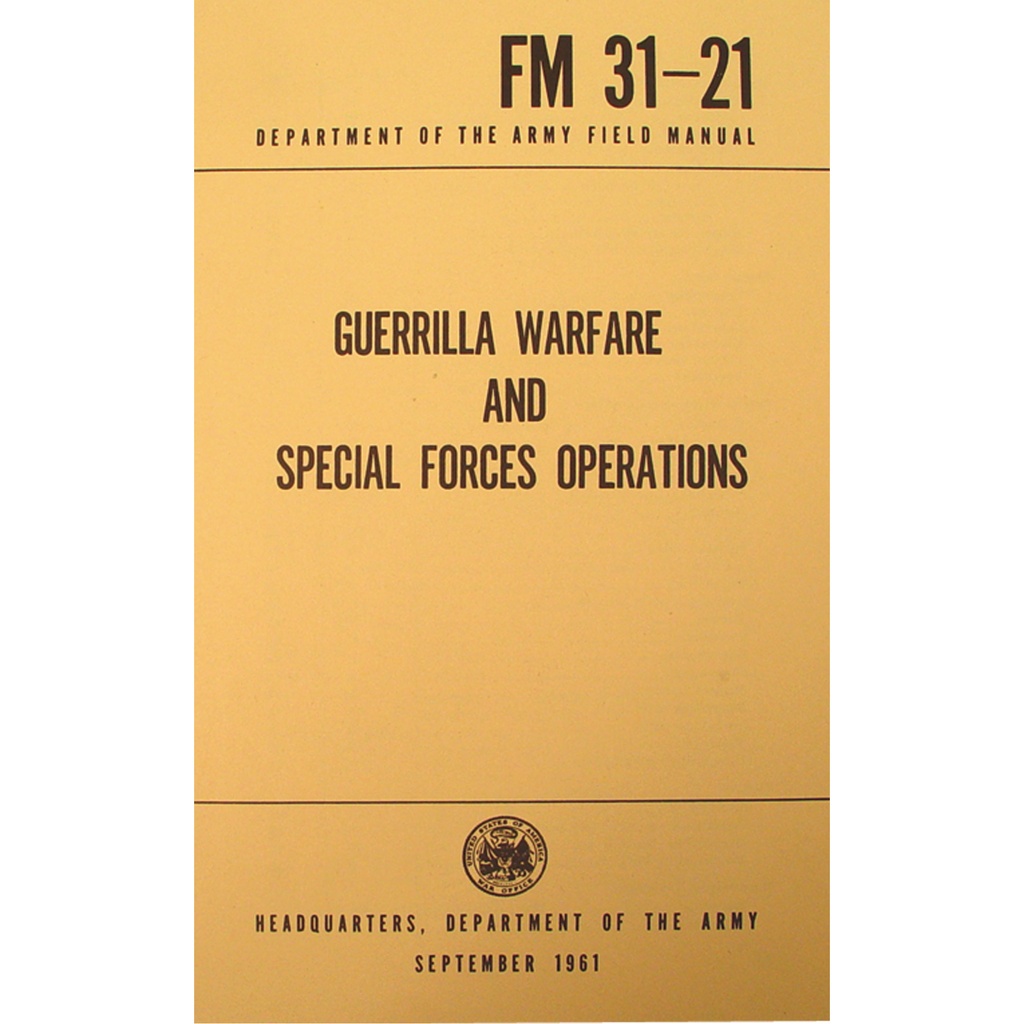
Collectors of serious blades and serious books already know the pattern—official yellow cover, Army emblem, simple typography. It’s the paper equivalent of a well-used but perfectly tuned balisong: nothing extra, everything essential.
Cold War Doctrine for the Modern Tactical Mind
Originally issued as FM 31-21 in 1961, this Special Forces field manual captures how the U.S. Army thought about guerrilla warfare at the height of the Cold War. Instead of hype, you get structure: fundamentals, control, logistics, intelligence, communications, and area command laid out like a mission checklist.
If you love the way a well-balanced butterfly knife rewards discipline and repetition, you’ll recognize the same mindset here. The doctrine is methodical—how to organize irregular forces, how to manage scarce resources, how to maintain control under chaos. It’s the tactical equivalent of drilling basic openings until every rep is clean.
Build Quality in Book Form: Why This Manual Feels Legit
In the balisong world, hardware details tell you if something is worth your time. With this manual, the signals are just as clear. The bold yellow cover, official Department of the Army seal, and the original 1961 layout all point to a straight, unedited reprint of a serious reference—not a casual pop-history summary.
Official Field Layout, No Fluff
The internal structure mirrors the field-ready design of a good combat or duty knife: everything in its place, nothing ornamental. Sections are broken down like a well-organized loadout—doctrine first, then specific mission components and support elements. Instructors and trainers can drop sections straight into a course outline, the way a coach builds a progression for butterfly knife flipping.
Readable, Durable, Shelf-Ready
The softcover format with a matte yellow finish sits comfortably in the hand or on a crowded training bench. The black, all-caps typography keeps the content legible in bad light or quick-reference moments. It’s the paper version of a workhorse EDC: meant to be handled, marked up, and used, not just displayed.
Collector, Instructor, Operator: Who This Manual Serves
For the collector, this is a slice of Cold War history with the original date, manual number (FM 31-21), and Department of the Army imprint intact. It pairs naturally with vintage military blades, reproduction balisong trainers, and classic service manuals on a curated shelf.
For instructors and martial arts schools, the way this Special Forces field manual breaks down guerrilla warfare reads like a ready-made curriculum. Each section can anchor seminars on unconventional operations, small-unit leadership, or mindset—just as you’d design a class around basic, intermediate, and advanced butterfly knife flipping progressions.
For modern tactically minded readers, the value is perspective. You see how doctrine from 1961 still shapes special operations thinking today, and where real-world practice has evolved beyond it. That context matters whether you’re training with a live blade, carrying an EDC, or teaching situational awareness.
Why Balisong Enthusiasts Actually Care About a Field Manual
The balisong and this manual share the same DNA: skill, discipline, and respect for real-world application. The community already understands that gear without mindset is just steel and hardware. This book speaks directly to that missing half.
- Skill-focused: Just like flipping fundamentals, this text drills basics—organization, control, communication—before layering complexity.
- Context-rich: It places individual action inside a larger operational plan, the way a single trick fits into a full balisong combo.
- Authentic: No dramatization, no movie gloss. It reads like someone briefing you before you step off.
What Balisong Buyers Want to Know
Are butterfly knives legal to buy?
Legality in the U.S. depends on state and sometimes local law. As of the latest widely cited summaries:
- Generally more permissive (often legal to own/carry with some limits): AZ, UT, TX, FL, GA, ID, KS, KY, MT, NC, ND, OK, SD, VT, WY, and others that have removed many knife restrictions.
- Mixed or restricted (ownership often allowed, carry limited or regulated): CA, NY, WA, MA, MI, NJ, PA, HI, and several others where blade length, concealed carry, or “gravity/switchblade” definitions can pull balisongs in.
- Local variations: Some cities and counties have stricter rules than their states.
Laws change, and interpretation can vary. Before you buy a butterfly knife or balisong, check up-to-date state and local statutes or consult an attorney. This manual itself is just printed doctrine—fully legal to buy and own in all states.
What’s the difference between a butterfly knife trainer and a live blade?
A balisong trainer is built like a real butterfly knife in size, weight, and handle geometry, but the “blade” is dull, often with holes or cutouts to reduce weight and make it obvious that it’s not live steel. Trainers are for learning openings, closings, and combos without the same risk of cuts.
A live-blade butterfly knife has a sharpened edge designed to cut. It demands tight control, awareness of bite handle vs. safe handle, and respect for both skill level and local law. Most serious flippers spend a lot of time on trainers first, then transition to live blades once fundamentals are locked in.
This Special Forces field manual is like doctrine for that entire mindset: start with fundamentals, build structure, then layer risk and complexity responsibly.
Is this butterfly knife good for learning to flip?
If you’re asking that, you’re already thinking like the kind of person who will actually use a manual like this. A good beginner balisong is predictable in balance, has solid pivot hardware, and a clear distinction between bite and safe handles. That lets you train muscle memory safely, the same way doctrine lets you train decision-making.
While this product itself is a book—not a blade—it fits into the same training ecosystem. The right combination is: a quality balisong trainer for reps, protective gear if you’re pushing hard, and a tactical mindset built from sources like this Cold War Special Forces field manual. Together, they create a more complete practitioner: collector, flipper, and responsible carrier.
Mindset as Part of Your Kit
Whether you line up your balisong collection like a museum, drill flipping combos until your forearms burn, or carry a single trusted blade every day, there’s a common thread: you care about what you carry and why. This manual earns space in that lineup.
For the collector, it’s an authentic Cold War artifact in accessible form. For the flipper, it’s a reminder that skill is more than tricks—it’s how you think, plan, and respond. For the daily carrier, it’s context for the responsibility that comes with steel in your pocket.
Add this yellow-cover Special Forces field manual to your setup as the doctrine behind the gear. Your balisong is the tool. This is the playbook.