
Yellow Bench Armorer’s Garand Technical Manual - Army Yellow
3 sold in last 24 hours
Butterfly knife for sale searches bring in people who respect real technical references—and this ordnance-yellow M1 Garand Armorer’s Manual is built the same way you expect a good balisong to be: precise, repeatable, and trusted. This softcover Army-format manual walks you through operator and organizational maintenance, parts, tools, and procedures for M1, M1C, and M1D rifles. On the bench, at the range, or in a collector’s kit, it’s the authoritative, no-fluff companion to your surplus legend.
From Clean Flips to Clean Rifles: Why Technical Manuals Matter
If you’ve ever dialed in a balisong’s pivots until every opening felt identical, you already understand why a good technical manual matters. The same obsessive attention you bring to a butterfly knife for sale listing—hardware, tuning, balance—keeps an M1 Garand running. This ordnance-yellow Armorer Edition manual is the rifle equivalent of a trusted community guide: precise, repeatable, and written by people who assumed the gun was going to see real use, not just live in a glass case.
Not a Butterfly Knife for Sale, but the Same Mindset
When you buy butterfly knife setups, you look past the surface. You want to see steel type, handle material, pivot system, and how it actually flips. This Department of the Army M1 Garand technical manual speaks that same language, just in rifle form. It covers operator and organizational maintenance for the M1, M1C, and M1D, with procedures, checklists, and diagrams that function like exploded views and tuning notes for a high-end balisong.
Instead of latch tuning and channel clearance, you get gas system checks, stock fit, and sight setup. Instead of washers vs. bearings talk, you get repair parts breakdowns and special tools that keep an old warhorse cycling smoothly. The mentality is identical: learn the platform well enough that every cycle, every shot, is predictable.
Field-Ordnance Build: How This Manual Is Structured
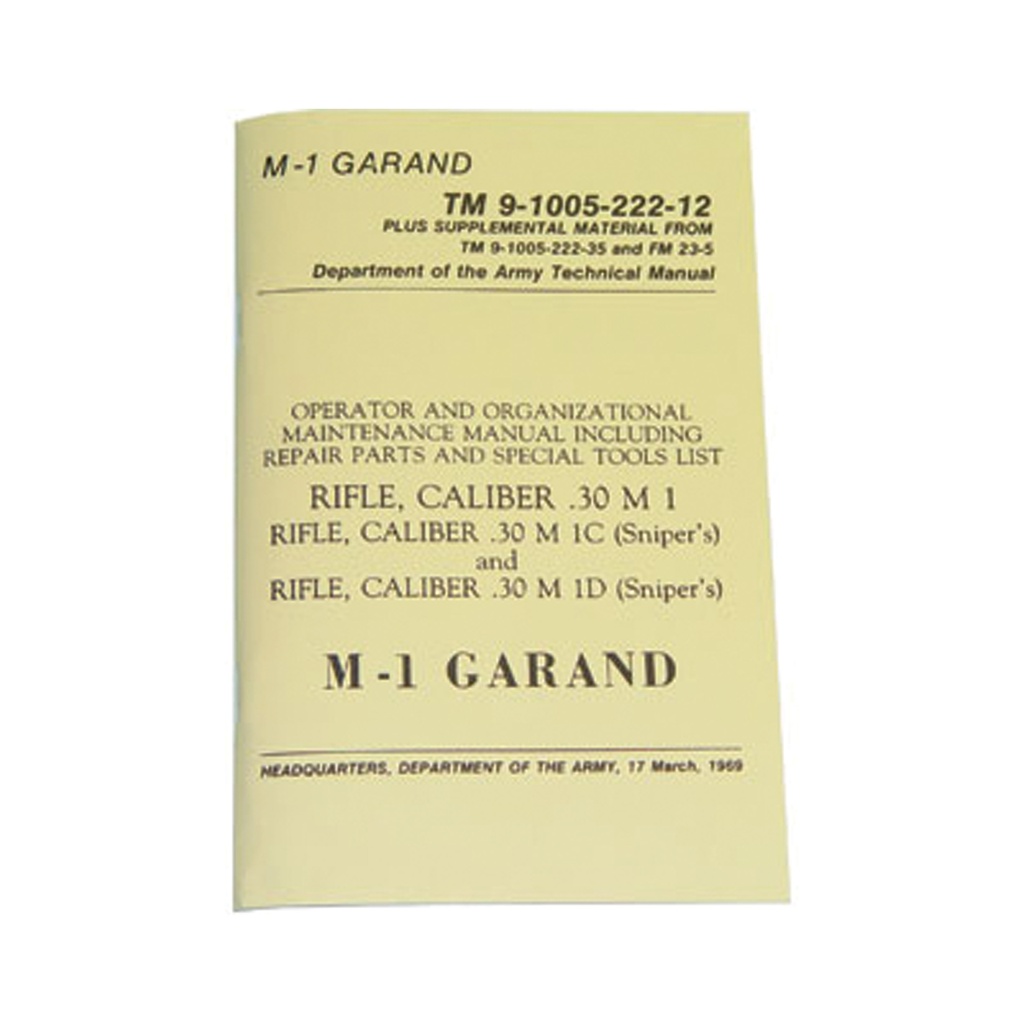
Just like serious buyers look at how a balisong is built, serious M1 Garand owners look at how their references are organized. This softcover manual is a Department of the Army Technical Manual in classic ordnance yellow, with TM 9-1005-222-12 front and center. Inside, the layout tracks like a well-organized flip progression: start with fundamentals, then move into more advanced operations with clear checkpoints.
Procedures and Checklists: The Rifle Version of Flip Combos
Where a flipper strings together openings, rolls, and aerials, this manual strings together inspection steps and maintenance actions. Operator and organizational maintenance sections read like combo breakdowns—each step documented, checked, and confirmed so nothing gets skipped. It’s written in that blunt Army style: no hype, just what to do and how.
Parts and Tools: Your Hardware Breakdown
Every serious balisong breakdown eventually shows hardware close-ups; this manual does the same for the M1 platform. The repair parts and special tools sections give armorer-level clarity on what you need, how it interfaces, and where it belongs. That means fewer guesswork trips to the bench and more time actually running the rifle.
Collector Value: An Authentic Army Yellow Snapshot
Collectors who buy butterfly knife grails for the story behind the steel will recognize what this ordnance-yellow cover represents. It’s a faithful Army-format document, dated 17 March 1969, pulling in material from TM 9-1005-222-35 and FM 23-5. It doesn’t try to be a modern coffee-table book; it leans into its identity as a working document from the era when M1s still sat in racks as duty rifles and sniper variants.
For an M1 Garand collection—especially one that includes M1C or M1D sniper builds—this manual becomes part of the narrative. It bridges the gap between a rifle on the wall and the procedures that kept it field-ready. Just like keeping factory boxes and original paperwork with a high-end balisong, having the right technical manual adds depth and value to the whole setup.
Range and Bench Use: The Daily Carrier Parallel
Daily carriers in the balisong world care about reliable deployment and long-term wear; M1 Garand shooters are no different. This Army manual is built to live in a range bag or on a bench, not just sit untouched on a shelf. Softcover, easy to lay flat, and written for armorers and operators, it’s meant to be referenced with tools on the table and solvent in the air.
Whether you’re confirming torque sequences, double-checking assembly order, or reviewing inspection points before a match or range trip, the manual functions like a trusted tuning guide—there when you need it, clear when fatigue or distraction might tempt shortcuts.
Skill Discipline: From Flipping Precision to Service Rifle Discipline
Butterfly knife flipping rewards consistency, repetition, and knowing exactly how your tool behaves. Running an M1 Garand well is the same kind of discipline. This manual supports that skill-building with structured information, no fluff. It gives you the framework to understand not just how to take the rifle apart and put it back together, but why each system matters—gas, stock fit, sights, trigger group, and more.
For competitive shooters and reenactors, that’s the edge: fewer malfunctions, more confidence, and a deeper connection to a historic platform. It’s like moving from random YouTube flip tutorials to a well-shot, structured balisong progression course—same moves, better framework.
What Balisong Buyers Want to Know
Are butterfly knives legal to buy?
Butterfly knife (balisong) laws in the U.S. change constantly and depend on both state and local codes. Broadly:
- Generally more permissive states like Arizona, Texas, Utah, Idaho, Oklahoma, and Florida tend to allow ownership and often carry of balisongs for adults, though there can still be restrictions on school zones, government buildings, and concealed carry.
- Highly restricted or banned states such as Hawaii, Washington, and New Mexico have statutes that treat butterfly knives similarly to switchblades or outright prohibit them.
- Mixed or nuanced states like California, New York, Massachusetts, and New Jersey may allow possession in the home but restrict blade length, automatic features, or concealment, and some case law specifically classifies balisongs as prohibited knives.
Because this shifts with new legislation and court decisions, always check your current state law, local ordinances, and any age or carry limitations before you buy or carry a butterfly knife or balisong. When in doubt, consult an attorney or your state’s official statutes, not just forum posts.
What’s the difference between a butterfly knife trainer and a live blade?
A butterfly knife trainer keeps the balisong flipping experience—the handle weight, channel feel, and pivot action—but replaces the sharpened edge with a dull or cutout "blade." It’s built for skill progression: drops and missed catches punish your timing, not your fingers.
A live blade balisong is a working knife: sharpened edge, real point, and real consequences for bad catches or sloppy technique. The community typically recommends trainers for learning new combos, aerials, and behind-the-back transitions, then migrating to a live blade once muscle memory and control are proven. The mechanics are the same; the risk and responsibility are not.
Is this butterfly knife good for learning to flip?
This specific product is not a butterfly knife for sale; it’s an M1 Garand technical manual. But the principle carries over: if you’re learning to flip, focus on balance, handle material, and pivot quality first, then legality in your state.
For beginners, a well-balanced balisong trainer with predictable handle weight and smooth pivots is usually the best on-ramp. Think of it like starting your M1 journey with a solid tech manual: get the foundation right, then push your skills. Whether you’re tuning an old warhorse or dialing in a new balisong, clear instructions and repeatable mechanics are what keep you progressing.
Where This Manual Fits: Collector, Flipper, Carrier Mindsets
However you come to gear—through flipping, collecting, or daily carry—you’re here for the same core thing: tools that respect your time and skill. This M1 Garand Armorer Edition Technical Manual does exactly that.
- For the collector, it’s an authentic Army-format snapshot that completes the story behind your M1, M1C, or M1D.
- For the shooter, it’s a bench-side guide that keeps your service rifle reliable under match or range pressure.
- For the gear enthusiast, it’s another piece of functional history—like a well-made balisong—that rewards anyone willing to learn how it works.
You don’t have to choose between being a flipper, a collector, or a carrier; the best kit serves all three. This ordnance-yellow manual simply takes that mindset from the channel and pivot world over to walnut and steel.