Mission-Ready Map Reading Training Manual - Field Tan
7 sold in last 24 hours
This isn’t a coffee-table read; it’s a mission tool. Reprinted from the U.S. Army FM 21-26, the Mission-Ready Map Reading Training Manual - Field Tan turns land navigation from theory into repeatable skill. Grid coordinates, azimuths, terrain association, pace count—it’s all here in a no-nonsense format built for classes, cadets, and serious outdoors work. The field-tan cover disappears into your kit, while the doctrine inside builds confidence when GPS fails and decisions actually matter.
When the Screen Dies, Your Skills Take Over
There’s a moment every serious navigator hits: the GPS glitches, the battery icon goes red, or the signal just vanishes. If you’ve trained with real land navigation, that moment doesn’t spike your heart rate—it sharpens your focus. The Mission-Ready Map Reading Training Manual - Field Tan is built for that moment. Reprinted from the official U.S. Army FM 21-26, this book turns map reading and land nav from vague theory into decisions you can stand on in the dark, in the rain, and under pressure.
Why This Land Navigation Manual Earns a Spot in Your Kit
Every page of this land navigation manual is doctrine written for people who actually have to get from point A to point B when mistakes cost time, energy, or safety. This isn’t generic hiking advice—it’s the same structure U.S. Army soldiers use to learn how to read a map under stress, track a pace count through thick terrain, and hold a compass azimuth when visibility drops to a few meters.
Whether you’re teaching a squad, running a ROTC lab, guiding a search-and-rescue team, or building your own skill set for backcountry work, this manual is built to be taught, drilled, and trusted.
Doctrine-Built Content: What’s Inside the Manual
Because this is a reprint of U.S. Army FM 21-26 Map Reading and Land Navigation, you’re getting a complete, structured land nav course—not random tips. Key sections include:
- Map Reading Fundamentals: Marginal data, symbols, scales, contour lines, and terrain features so you see more than just colors and lines on paper.
- Grid Coordinates and MGRS: How to pull and plot accurate grid references, with the discipline to avoid costly digit errors.
- Azimuths and Bearings: Converting between grid, magnetic, and true north so your compass and map agree every time.
- Terrain Association: Matching what you see on the ground to what’s printed on the map—your fastest path to confident navigation.
- Pace Count and Distance Estimation: Building a personal pacing system that works uphill, downhill, day, or night.
- Route Planning and Movement: Choosing lines of travel, checkpoints, and backstops that forgive small errors but prevent big failures.
Each topic is explained in straight, functional language, with the kind of examples that translate directly onto the ground when you start moving.
Built Like a Field Tool, Not a Coffee-Table Book
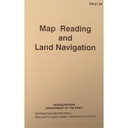
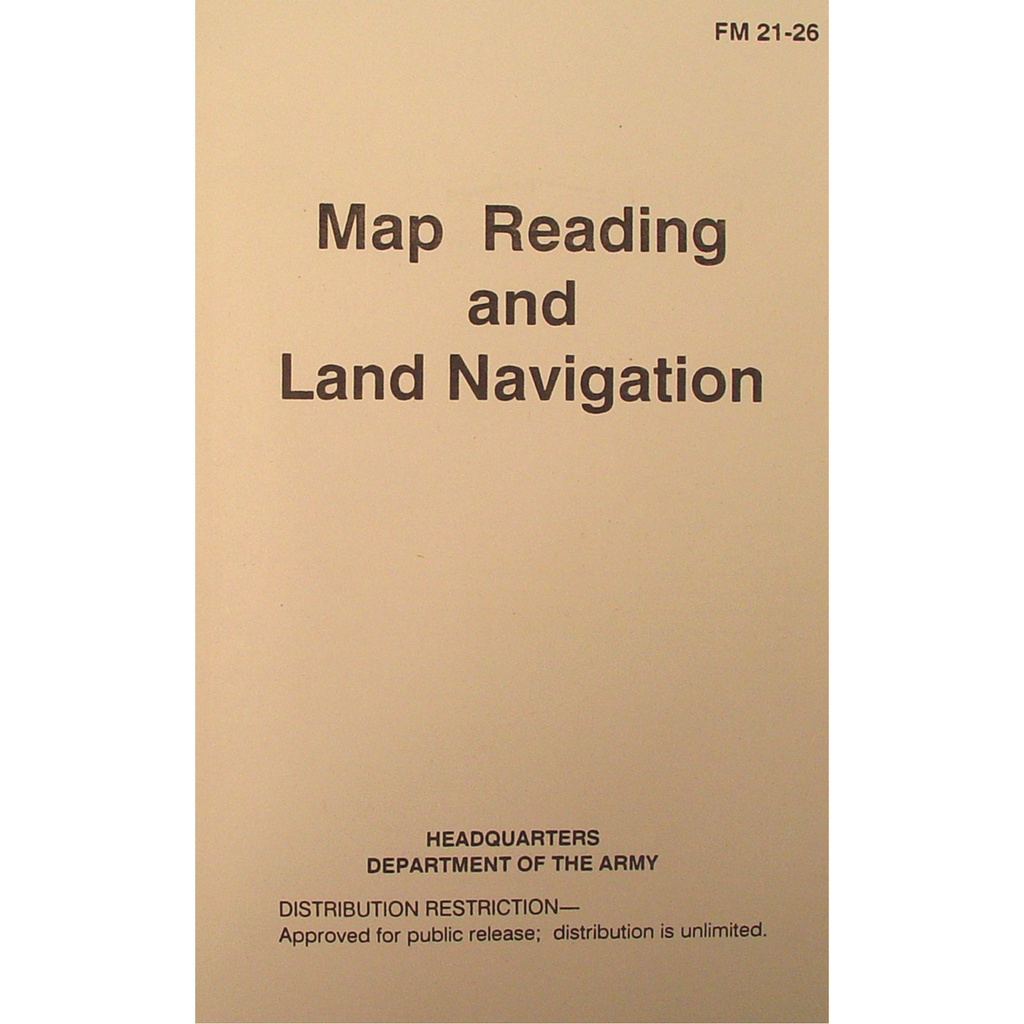
The visual design is no accident. The field-tan softcover, minimalist black text, and FM identifier instantly match the rest of your military manuals and tactical gear. It disappears into a ruck, range bag, or instructor kit without screaming for attention, but it’s easy to spot when you need to pull it out in a briefing or during a lane walk.
Field-Tan Softcover That Plays Well with Gear
The matte field-tan cover doesn’t glare under sunlight or wash out under red light at night. It won’t reflect like a glossy paperback when you’re trying to stay low-profile, and it visually blends with coyote, ranger green, and other common field colors.
Perfect Bound, Classroom-Ready
The manual uses perfect binding, so it feels like a real course textbook while staying compact enough for a cargo pocket or admin pouch. It’s ideal for handing out to classes, unit training events, or survival schools that need each student working from the exact same doctrine.
Training Value: From Classroom Whiteboard to Night Land Nav
This land navigation training manual shines when it’s not just read, but used. Instructors can structure entire courses around the chapter flow: introduce concepts in the classroom, rehearse on the map, then confirm them during day and night lanes. Because it’s straight out of Army doctrine, you don’t have to wonder if the material is watered down.
Use it to:
- Standardize training across squads, patrols, or classes.
- Give students a tangible reference they can annotate and keep.
- Build progressive land nav tasks—from simple terrain ID to complex route planning.
- Refresh perishable skills before a major exercise or backcountry trip.
Collector, Instructor, or Serious Outdoorsman: Why You Carry It
If you collect military manuals, this FM 21-26 reprint fills a core slot: map reading and land navigation is one of the foundational soldier skills, and this volume represents decades of institutional learning condensed into one book.
If you teach—ROTC, JROTC, cadets, Scouts, SAR, or outdoor skills—this manual lets you anchor your curriculum to official doctrine instead of reinventing the wheel. And if you’re simply the person in the group who always ends up in charge of the route, this is your quiet edge when the trail markers disappear and the weather rolls in.
What Balisong Buyers Want to Know
Are butterfly knives legal to buy?
Legality changes fast and depends heavily on where you live and how you intend to carry a butterfly knife or balisong. As of the latest widely referenced updates, many U.S. states allow you to buy butterfly knives at the state level, but city and county rules can still be restrictive. A few examples (not exhaustive, and always subject to change):
- Generally more permissive states like Texas, Arizona, Utah, and Florida tend to allow ownership and carry of balisongs for most adults.
- Regulated or restricted states like California, New York, and Massachusetts often limit blade length, concealed carry, or treat balisongs similarly to switchblades under certain statutes.
- Local ordinances in major metro areas can be stricter than state law, especially regarding carry and public possession.
This manual itself is only a book, completely legal to purchase and own nationwide, but if you’re pairing it with a butterfly knife for sale from the same site, you should always check both your state law and local ordinances before you buy, carry, or train. When in doubt, consult current statutes or an attorney familiar with weapons law in your jurisdiction.
What’s the difference between a butterfly knife trainer and a live blade?
In the balisong community, a trainer is a butterfly knife with an unsharpened, usually blunt “blade” that lets you practice flipping without the same cut risk as a sharpened edge. A live blade balisong is sharpened and behaves like a functional knife in addition to being a flipping platform.
Key differences:
- Edge: Trainers have no cutting edge; live blades are sharpened.
- Use: Trainers focus purely on skill-building and trick progression; live blades blend EDC, utility, or self-defense with flipping.
- Risk and learning curve: Trainers let beginners learn openings, closings, and aerials with fewer injuries, while live blades demand tighter discipline.
Just like land nav skills start on paper before you go to a night course, most flippers start with a trainer before moving to a live blade.
Is this butterfly knife good for learning to flip?
This specific product is a land navigation manual, not a butterfly knife, but the logic of good training crosses over. When you look at any balisong for sale and ask if it’s good for learning to flip, focus on a few fundamentals:
- Balance: A neutral or slightly handle-biased balance helps smooth, predictable rotations—just like a well-set pace count keeps you honest on distance.
- Pivot hardware: Bushings or well-tuned washers with minimal handle play matter more than flashy styling.
- Handle design: Chamfered edges, consistent grip, and clear bite/safe handle identification give you confidence during reps.
Pairing this navigation manual with a quality balisong trainer for sale on the same site makes sense if you’re building a full skill set: one tool builds your sense of direction on the ground, the other builds your coordination and control in the hand.
From Grid Lines to Clean Lines: Owning Your Skillset
Whether you’re the person who always ends up holding the map, the instructor responsible for getting a class through a land nav course, the collector archiving authentic military manuals, or the flipper browsing for the next butterfly knife for sale to master, the common thread is the same: skill matters.
The Mission-Ready Map Reading Training Manual - Field Tan respects that. It doesn’t entertain; it equips. It’s doctrine you can underline, test, and trust—ready to live in the same pack, on the same shelf, or in the same training rotation as your best gear and your most reliable blades.
Collectors, instructors, and daily carriers all find something real here: a compact volume that quietly raises the floor on your capability every time you open it.