
Cold War Ordnance Field Reference Manual - Yellow Cover
4 sold in last 24 hours
Butterfly knife for sale searches bring a certain mindset: people who care about real hardware, real doctrine, and honest sources. This field-issue ordnance reference manual is a reprint of a 1966 Department of the Army technical manual on incendiaries and unconventional warfare devices. It reads like the real thing because it is—clean diagrams, direct terminology, and no fluff. Ideal for shop displays next to your balisong lineup, or for collectors who respect original military context as much as clean flips.
From Clean Flips to Clean Doctrine: Why This Manual Sits Next to Your Balisong
The first time you land a combo with a well-balanced balisong, you feel the mechanics in your bones: weight, timing, control. Opening this field-issue ordnance reference manual hits a similar nerve. Instead of pivots and handles, you’re looking at the mechanics of incendiaries and unconventional warfare—laid out with the same precision you expect from a serious butterfly knife for sale listing, but in Department of the Army language.
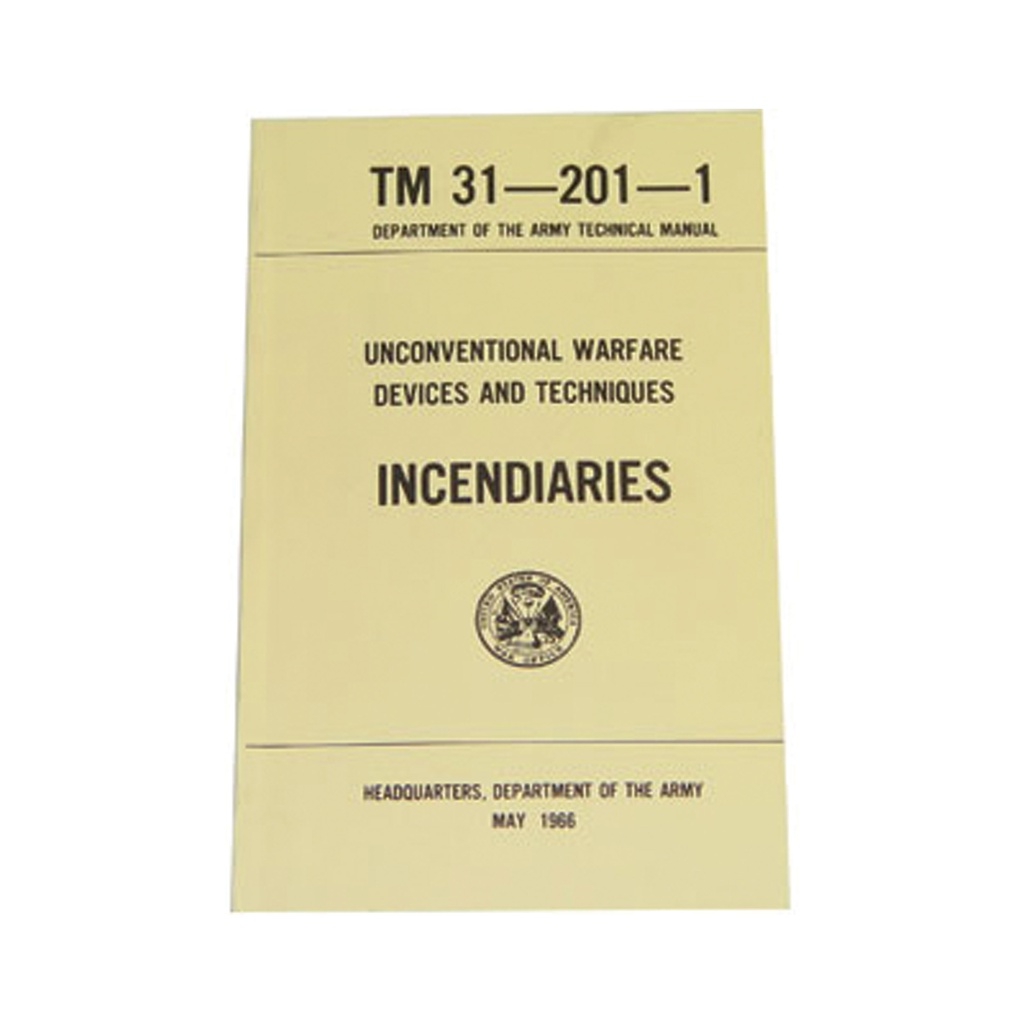
This is a May 1966 Army technical manual reprint, softcover, yellow cover, and unapologetically direct. It’s the kind of book that belongs on the same shelf as your favorite balisong, because it treats its subject with the same respect you give clean flipping technique.
Not Just Another Novelty Book: A Field-Issue Ordnance Reference
In a world full of flashy gear and throwaway content, this manual shows up like a well-tuned balisong in a sea of gas-station butterflies. It’s a Department of the Army Technical Manual—TM 31-201-1—focused on unconventional warfare devices and techniques: incendiaries. The tone is crisp, disciplined, and built for people who need information to work, not entertain.
For retailers, it’s a perfect counterpoint to a case full of live blades and trainers. For collectors, it’s a time capsule: Cold War doctrine distilled into clean diagrams and structured procedures. For martial artists and tactical enthusiasts, it’s background context that makes every piece of steel you own feel a little more anchored in real history.
Build Quality in Paper Form: How This Manual Matches Serious Hardware
The balisong community respects build details: pivot hardware, handle material, balance. This manual earns a similar respect through its own physical and content build.
Softcover Field-Issue Format
The pale yellow softcover isn’t an aesthetic gimmick; it mirrors authentic field-issue Army manuals designed for rucksacks and range bags. The matte finish cuts glare under bright light, similar to a stonewashed blade minimizing reflection. It feels like something that belongs in a kit, not a coffee-table prop.
Clean Typography, Clear Hierarchy
The black sans-serif text, TM number at the top, and Department of the Army seal create the same sense of order that a clean channel and tight tolerances give a quality balisong. Sections are structured for quick reference—headings, subheadings, and diagrams that read like technical drawings, not marketing art.
Why Balisong Collectors and Flippers Gravitate to Manuals Like This
Collectors who hunt for a specific balisong for sale aren’t just buying steel; they’re buying story and lineage. This ordnance technical manual provides that context. It’s the doctrinal backdrop to decades of tactical design—incendiaries, devices, and techniques that influenced how gear evolved.
If your collection includes classic butterfly knives, modern balisong trainers, and competition-grade flippers, this manual slides in as a reference piece that explains the world those tools grew out of. It’s not glamorized, not sensationalized—just like a specs-first balisong listing that tells you steel type, hardware, and balance point without hype.
From Bench Practice to Book Study: Skill Mindset, Different Medium
Butterfly knife flipping is a discipline: repetition, attention to detail, technical vocabulary. This manual speaks that same language in a different domain. Where you think in terms of bite handle, safe handle, and pivot action, the manual thinks in terms of components, effects, and procedures.
That’s why it resonates with the balisong crowd. Whether you’re working on a new aerial or refining your EDC setup, you’re already in the habit of studying mechanics. This book just expands that habit into understanding how ordnance and unconventional devices were formally documented and taught.
Legal, Responsible, and Historical: Not a How-To for Chaos
Just like browsing a butterfly knife for sale doesn’t mean you’re reckless, owning this ordnance reference doesn’t make you irresponsible. It’s a historical technical manual, reprinted for study, collection, and professional reference. The content is presented in the original Army style—serious, structured, and context-driven.
Shops that already navigate local laws around balisong for sale listings will appreciate that this book occupies a similar lane: real information, historically anchored, intended for informed adults who respect both skill and safety.
What Balisong Buyers Want to Know
Are butterfly knives legal to buy?
Legality depends on where you live. In the United States, some states treat a balisong like any other folding knife, while others classify it as a gravity or switch-style knife with tighter restrictions. As of recent guidance, states generally considered more permissive about owning or buying a butterfly knife include Texas, Arizona, Utah, Nevada, Florida, and many others where folding knives are broadly legal. Stricter or more complex states include California (length limits and carry restrictions), New York (case law historically unfavorable, though evolving), Hawaii (outright bans), and a few others with local ordinances.
Laws change, and sometimes cities or counties add extra rules, so always check your current state and local statutes—or consult an attorney—before you buy, carry, or ship a balisong. This manual itself is a book, not a weapon, but the same mindset applies: treat serious material seriously and stay inside the law.
What’s the difference between a butterfly knife trainer and a live blade?
A butterfly knife trainer keeps the balisong mechanics but replaces the cutting edge with a blunt or vented training blade. You still have a bite handle and safe handle, pivot hardware, and the same flipping patterns—but no live edge. That means you can work on timing, combos, and aerials without turning every missed catch into a bandage session.
A live blade balisong is a functional cutting tool with an actual edge and tip. It’s what you’d use for EDC tasks, cutting cordage, or, in some traditions, martial applications. Serious flippers often start on a trainer, then transition to a live blade once their control and respect for the mechanism are dialed in. In the same way, this technical manual is about understanding context and mechanisms before you assume anything about their use.
Is this butterfly knife good for learning to flip?
This product is a book, not a balisong—so it won’t help you land your first chaplin directly. But it does fit the flipper mindset: study, structure, and technical depth. If you’re the kind of person who reads steel charts, pivot breakdowns, and balance discussions before choosing a butterfly knife for sale, you’re exactly the kind of person who will appreciate a historical Army manual on ordnance.
Use your trainer or live blade for the reps. Use this manual when your hands are resting but your brain still wants something real to study.
Where This Manual Lives in Your World: Case, Shelf, or Bench
For the collector, this field-issue ordnance reference manual is a spine-out statement: yellow cover, Army seal, and TM number that says you care about original sources, not just cool thumbnails.
For the flipper, it’s part of the same seriousness you bring to a clean session—proof that your interest in blades and devices comes with a respect for how they’ve been documented and controlled historically.
For the daily carrier, it’s the book that sits near your gear, a reminder that every piece of steel, every balisong, and every tool has a story rooted in real-world doctrine.
However you show up—collector, flipper, or carrier—this manual earns its space the same way a good balisong does: with honesty, clarity, and zero wasted motion.