Skull-Guard Heritage Combat Trench Knife - Brass
8 sold in last 24 hours
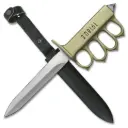
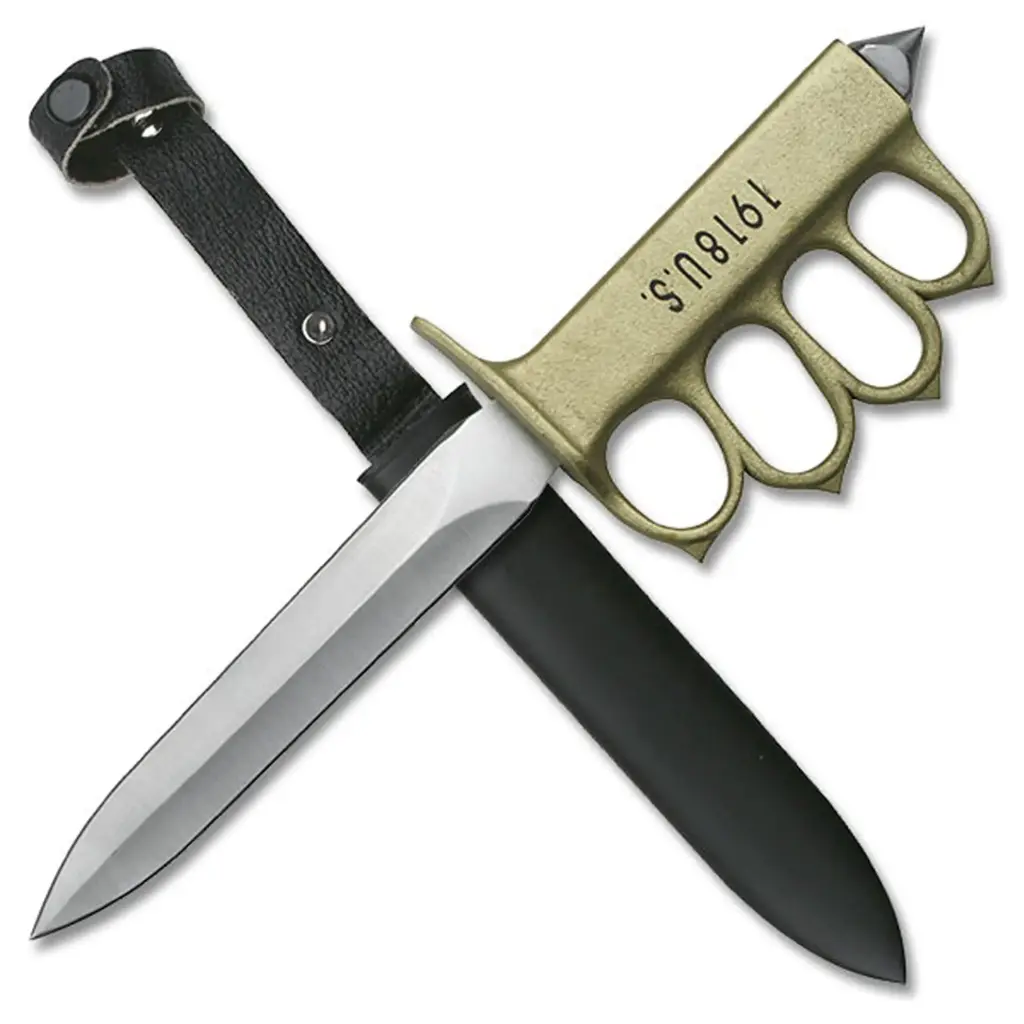
In your hand, the Skull-Guard Heritage Combat Trench Knife feels like a 1918 relic revived in brass and steel. A 6.75" double-edged dagger rides a full-tang spine, locked into a solid brass knuckle-guard stamped “1918 U.S.” and finished with a skull-crusher pommel. The satin blade is all business, while the belt-ready leather sheath makes this trench knife as carryable as it is collectible. For history-minded collectors and combat-knife fans, this is a display piece that still knows what it was built for.
Skull-Guard Heritage Combat Trench Knife - Brass
Pick it up and there’s no mistaking what this is meant to be. The Skull-Guard Heritage Combat Trench Knife takes the classic 1918 U.S. trench pattern – brass knuckle guard, double-edged dagger, skull-crusher pommel – and puts it back in your hand as cold metal, not just a photo in a history book. It’s part battlefield artifact, part modern fighting dagger, built for collectors who want more than a wall-hanger.
A Combat Trench Knife Built on 1918 DNA
Every line on this combat trench knife points straight back to the Great War. The full brass knuckle-duster handle is stamped “1918 U.S.” in bold relief, wrapping your fingers in solid metal with full-guard protection. Out front, a 6.75" double-edged dagger blade in a satin silver finish runs to a fine point, designed for thrusting and close-quarters work in the mud and chaos of the trenches.
At 11.4" overall, this trench knife sits in that sweet spot: large enough to feel like a serious fighting dagger, compact enough to ride on a belt without feeling like a sword. The included leather sheath supports vertical belt carry, so the knife carries like a traditional fighting knife while still presenting as a heritage trench design when drawn.
Full-Tang Steel and Brass: Materials That Matter
Under the brass, this is a full-tang fixed blade, giving the knife a solid, continuous spine of steel from tip to skull-crusher. The dagger blade is double-edged, plain on both sides, with a central spine for rigidity and a satin finish that shows off the grind lines. It’s not a fantasy prop – it’s a real combat-style fixed blade that happens to look like it just walked out of 1918.
Brass Knuckle-Guard Handle with 1918 Stamping
The handle is a single piece of matte-finished brass forming a full knuckle-duster guard. Each finger hole is rounded for a locked-in grip, and the brass carries that old-world, battlefield-gear presence you don’t get from modern synthetics. The “1918 U.S.” stamp isn’t printed – it’s raised right into the guard, giving the knife that unmistakable trench knife identity from across the room.
Skull-Crusher Pommel for Close-Quarters Impact
At the butt, the skull-crusher pommel tapers to a blunt point, designed for impact strikes, glass-breaking, or close-quarters control. It completes the true trench-knife silhouette: blade out front, brass knuckles protecting the hand, and a striking pommel out back.
Collector Appeal: A Trench Knife That Looks and Feels Like a Relic
For knife collectors and military history buffs, this heritage trench knife hits a specific nerve: it looks like the kind of piece you’d expect to find in a WWI display case but is accessible enough to actually own, handle, and display openly. The brass handle develops character over time as it patinas, giving each knife a slightly different aged look depending on how it’s carried and stored.
On a stand, the contrast between the brass handle, silver dagger blade, and black leather sheath tells a complete story at a glance. Sheathed on a belt, it reads as a serious fighting knife; drawn, it’s instantly recognizable as a 1918 trench-style design.
Carry and Use: Heritage Combat Knife with Belt-Ready Sheath
While this isn’t a modern tactical folder or an EDC balisong, it is built to be carried. The included leather sheath is shaped for the dagger profile and fitted with a retention strap and snap to hold the knife in place. A belt loop on the sheath supports standard vertical carry, so it rides like a classic combat knife on the hip.
If your collection already includes folders, OTFs, and balisong trainers, this trench knife fills a different slot: the dedicated combat-style fixed blade with real historical roots. It’s just as at home on a gear wall next to your other fighting knives as it is in a display case behind your favorite balisong lineup.
Build Details Serious Knife Collectors Look For
Even though this isn’t a butterfly knife or balisong, it still respects the same things serious knife buyers care about: steel, construction, and feel in the hand.
- Blade: 6.75" double-edged dagger, plain edge, satin silver steel with a central spine for rigidity and thrust control.
- Handle: Matte brass knuckle-duster guard with “1918 U.S.” raised stamping for authentic trench aesthetics.
- Tang: Full-tang construction for durability under impact and thrust.
- Pommel: Integrated skull-crusher butt cap for striking and non-blade impact tasks.
- Carry: Black leather belt sheath with snap-retention strap for secure vertical carry.
What Balisong Buyers Want to Know
Even if you came here searching for a butterfly knife for sale or a balisong for sale, a lot of the same questions come up around any edged tool you’re adding to your kit or collection: legality, training vs. live use, and whether it fits your skill path.
Are butterfly knives legal to buy?
U.S. butterfly knife (balisong) laws change fast and vary state by state. This trench knife is a fixed blade, which is treated differently than a balisong, but if you’re also shopping for a butterfly knife for sale, here’s a general snapshot as of 2024. This is not legal advice – always confirm your local statutes before you buy or carry.
- Generally friendlier to balisongs: States like Texas, Arizona, Utah, Oklahoma, Idaho, Florida, Georgia, and many others broadly allow ownership and carry of butterfly knives, with some restrictions on blade length or concealed carry in certain locations.
- Restricted or treated like switchblades in many cases: States including California, New York, New Jersey, Massachusetts, Washington, Hawaii, and a few others may classify balisongs as switchblades or dangerous weapons, restricting carry, sale, or sometimes possession.
- Local rules matter: Even in balisong-friendly states, specific cities and counties can have stricter ordinances about blade length, carry method, or public spaces.
Fixed-blade trench knives like this one are usually evaluated under separate fixed-blade laws that focus on length, concealment, and intent. Before you buy a butterfly knife, balisong trainer, or a trench knife, check both state statutes and any local ordinances to stay on the right side of the law.
What’s the difference between a butterfly knife trainer and a live blade?
If you’re crossing over from collecting combat-style fixed blades to exploring butterfly knife flipping, you’ll see two core balisong options: trainers and live blades.
- Balisong trainer: A butterfly knife-shaped tool with no sharpened edge. The “blade” is usually blunt or has milled-out sections, letting you practice openings, aerials, and combos without cutting yourself. Trainers are ideal for learning new tricks or drilling muscle memory.
- Live-blade balisong: A true butterfly knife with a sharpened edge and real point. This is what you’d carry, cut with, or compete with once your technique is clean. Live blades demand respect: bad timing or sloppy form means real cuts.
Community best practice is simple: start on a balisong trainer for sale that matches the weight and balance of the live blade you eventually want, then graduate once your fundamentals are stable.
Is this butterfly knife good for learning to flip?
The Skull-Guard Heritage Combat Trench Knife is not a butterfly knife or balisong – it’s a fixed-blade combat trench dagger. If you’re here to learn flipping, you’ll want a dedicated balisong trainer with tuned pivot hardware, balanced handles, and a safe pseudo-blade.
Where this trench knife fits in is the broader edge-weapon and collector journey: it sits alongside your butterfly knives and balisongs as the historical combat piece in the lineup. You drill your flips with a trainer, carry a live balisong or folder as EDC where legal, and keep a trench knife like this as the heritage, battlefield-inspired centerpiece.
Where This Trench Knife Belongs in Your Lineup
Whether you’re deep into butterfly knife flipping, focused on military history collecting, or just building out a serious edged-weapon wall, the Skull-Guard Heritage Combat Trench Knife fills a specific role.
- The collector: Gets a faithful 1918-style trench knife with real brass, a skull-crusher pommel, and a dagger blade that looks period-correct on a stand or in a case.
- The combat-knife enthusiast: Adds a full-tang, double-edged fighting dagger with genuine impact features and a belt-ready leather sheath.
- The crossover balisong fan: Rounds out a collection that already includes trainers and live butterfly knives with a piece of historical combat design that started long before modern flipping comps.
It’s not trying to be a balisong, an OTF, or a pocket EDC. The Skull-Guard Heritage Combat Trench Knife is exactly what it looks like: a 1918-inspired trench dagger in brass and steel, built for people who appreciate when a blade’s story is written right into its silhouette.
| Blade Length (inches) | 6.75 |
| Overall Length (inches) | 11.4 |
| Blade Color | Silver |
| Blade Finish | Satin |
| Blade Style | Dagger |
| Blade Edge | Plain |
| Blade Material | Steel |
| Handle Finish | Matte |
| Handle Material | Brass |
| Theme | Trench Knife |
| Handle Length (inches) | 4.65 |
| Tang Type | Full Tang |
| Pommel/Butt Cap | Skull-crusher |
| Carry Method | Belt Carry |
| Sheath/Holster | Leather Sheath |