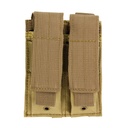
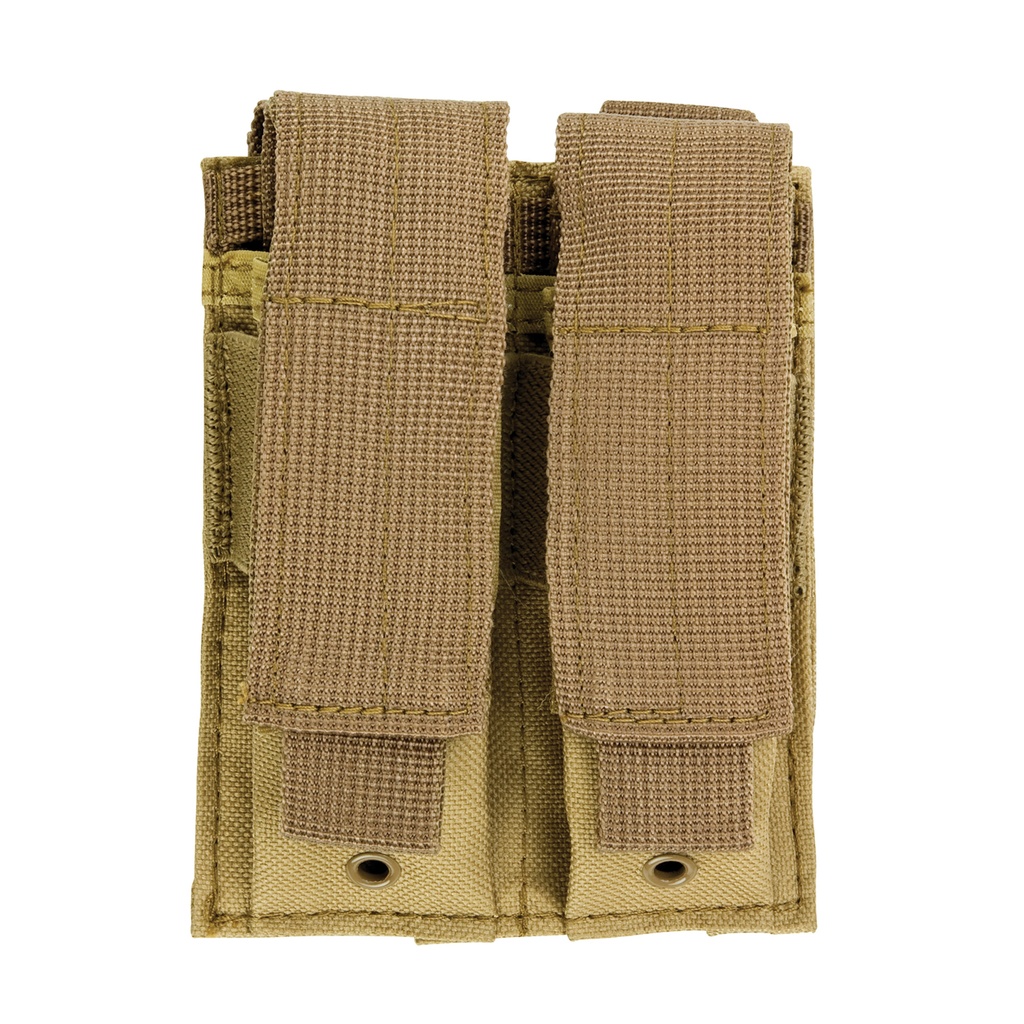
Sandline Rapid-Open Double Mag Pouch - Tan
7 sold in last 24 hours
A double pistol mag pouch should make reloads feel automatic. This forward-open design does just that—hook-and-loop flaps clear fast, elastic sides keep double-stack mags locked in, and PALS straps mount it tight to your vest, belt, or pack. Heavy-duty tan PVC shrugs off abrasion and dust while drainage grommets purge grit after a day in the dirt. Range day, training block, or duty shift, this low-profile pouch keeps your next two mags right where your support hand expects them.
Forward-Open Reloads When Seconds Actually Matter
This forward-open double pistol mag pouch is built for the moment your slide locks back and your support hand is already moving. The tall, tan flaps break clean with hook-and-loop, the mags index naturally, and the pouch hugs your carrier or belt tight so nothing shifts when you drive the reload home.
Two side-by-side cells swallow most standard double-stack pistol magazines. The geometry is simple and honest: enough structure to keep mags upright, enough flex in the elastic sides to grip them under movement, and a low-profile face that won’t snag when you’re moving through doors, vehicles, or barricades.
Built as a Duty-Ready Double Pistol Mag Pouch
This isn’t a fashion accessory; it’s a purpose-built double pistol mag pouch meant for range work, duty carry, and serious training. The tan PVC outer shell is thick, abrasion-resistant, and easy to wipe down after dust, mud, or carbon grit collect during a long day outside.
PALS-Compatible Backing for Real Loadouts
The rear of the pouch is stitched in a familiar pattern for anyone running modern tactical kit: PALS-compatible straps that weave cleanly into MOLLE fields on plate carriers, battle belts, chest rigs, or packs. Once threaded and snapped in, the pouch locks down flat so your magazines don’t bounce, tilt, or print awkwardly under gear.
This mounting style keeps your double pistol mag pouch modular. Shift it from your chest rig to your range bag, or from your plate carrier to a grab-and-go case without changing how your reloads feel. Muscle memory stays the same; only the platform changes.
Hook-and-Loop Flaps with Forward-Open Access
The defining feature is the forward-open flap design. Instead of wrestling with short, awkward covers, you get tall, easy-to-grip flaps that peel forward and out of the way. The hook-and-loop closure is tuned for real use: strong enough to stay shut when you’re sprinting or prone, but quick to clear when you rip for a mag.
Once open, the flaps naturally want to fall forward, not back over the pouch, which means your support hand isn’t fighting fabric while it indexes a fresh magazine. In gloves, under stress, or at speed, that detail matters.
Retention That Balances Security and Speed
Inside each cell, elastic retention does the quiet work. It cinches the sides just enough to hug standard double-stack pistol magazines, keeping them from rattling or walking upward during movement. You get that reassuring resistance when you first pull, followed by a clean release as the mag clears the pouch.
Because the retention is built into the sides instead of relying on over-tight front shaping, the front panel can stay relatively flat. That keeps the profile low on your carrier while still giving each magazine its own consistent draw path.
Drainage Grommets for Dust, Mud, and Rain
At the bottom of each pouch sits a metal drainage grommet. It’s a small detail that matters in the field. Sand, unburnt powder, rain, or wash water all find their way out instead of pooling inside and grinding against your magazine bodies. Between the PVC shell and the covered design, your mags stay protected without turning the pouch into a debris trap.
Tan PVC That Blends with Modern Tactical Kits
The color isn’t an afterthought. Tan is the working color of modern plate carriers, chest rigs, and range belts in arid and mixed environments. This double pistol mag pouch disappears into coyote, khaki, and desert rigs instead of standing out. Whether you’re running full kit or a minimalist belt, the muted tan reads as professional, not flashy.
The heavy-weave PVC fabric backs that look with function. It’s rigid enough to hold shape when empty, which makes reindexing mags easier, and tough enough to handle being dragged across barricades, vehicle interiors, and gravel without fraying apart.
Low-Profile, Symmetrical Layout
The two mag cells are mirrored and tight, stitched with reinforced edges so the pouch keeps its rectangle, not a sagging bulge. That symmetric layout matters when you draw under time: no guessing which side is which, no odd angles. Your support hand goes to the same place every time and finds a mag sitting upright, exactly where it should be.
Range Day to Duty Shift: One Pouch, Two Extra Mags
Whether this lives on your duty belt or your dedicated range rig, it’s built for repetition. Every reload on the shot timer and every administrative mag change during training feels the same because nothing in this double pistol mag pouch is trying to be clever. It’s simply designed for honest work.
Load it with your primary carry mags for consistent practice or run it as part of a full-duty setup with matching rifle mag pouches and a med kit. The forward-open, covered design protects feed lips from knocks and dirt, while still keeping the reload path direct and predictable.
What Balisong Buyers Want to Know
Are butterfly knives legal to buy?
Butterfly knife legality in the U.S. is a state-by-state and sometimes city-by-city issue, and it changes periodically. In some states, balisong or butterfly knives are treated like standard folding knives, while in others they’re restricted or banned to carry, possess, or sell. A few examples as of recent guidance: many states like Texas and Arizona are generally permissive, while places like Hawaii and parts of California are far more restrictive. Because laws shift, always check your current state and local statutes—and, if needed, talk to a qualified attorney—before you buy a butterfly knife or balisong or decide to carry one.
What’s the difference between a butterfly knife trainer and a live blade?
A butterfly knife trainer is built like a balisong but with a blunt, unsharpened "blade"—often with cutouts or holes—to let you practice flipping without risking serious cuts. A live blade butterfly knife has a sharpened edge designed for cutting, utility, or defensive roles. Trainers are the go-to for learning new tricks, building muscle memory, and drilling opening patterns, while live blades demand strict control and safe-handle discipline. Many flippers keep both: a trainer for progression, a live balisong for carry or collection.
Is this butterfly knife good for learning to flip?
This specific product is a double pistol mag pouch, not a balisong. But when you’re looking for a butterfly knife to learn flipping, focus on balance (neutral or slightly handle-biased), smooth pivot hardware (bushings or well-tuned washers), and safe, clearly marked handle orientation. A dedicated balisong trainer with solid handles and predictable weight is usually the smartest place to start. Once you can land basic openings, rollovers, and fan patterns cleanly on a trainer, moving to a live blade feels far more controlled and safe.
Where This Pouch Fits in Your Kit
Every kit has its identity: some people obsess over clean reloads the way flippers chase the perfect zero-tap combo. Others care more about a squared-away, consistent gear layout. This forward-open double pistol mag pouch respects both. It keeps your next two magazines indexed the same way, every time, whether you’re running drills on a flat range or working a long duty shift.
If you’re the meticulous organizer, it slots cleanly into your MOLLE grid and disappears into your tan carrier. If you’re the performance-focused shooter, it’s just one less variable in the reload equation. Either way, it’s a small piece of kit that does exactly what you ask of it—and nothing you don’t.