Field Precision Sniper Doctrine Manual - Teal Softcover
3 sold in last 24 hours
You don’t build real precision off internet myths. "Sniper Training And Employment" is the original TC 23-14 Army sniper manual, reprinted complete for serious students of long‑range marksmanship. Inside is official doctrine on training, equipping, and tactically employing infantry snipers, from fieldcraft and stalks to mission planning and target engagement. Whether you’re a collector of military manuals, a law‑enforcement instructor, or a precision‑rifle shooter who wants the source material, this softcover puts authentic sniper doctrine directly in your hands.
When Precision Matters More Than Hype
There’s a difference between reading about snipers and studying how real infantry snipers are trained, equipped, and employed. Sniper Training And Employment is the U.S. Army’s TC 23-14 manual—an official doctrine reprint from 1989 that strips away the movie gloss and gives you the field-level reality of long-range precision. If you care about how shots actually get made and how teams actually move, this is where you start.
Not a Butterfly Knife for Sale, But the Same Discipline
If you’re the kind of person who obsessively dials in balance on a balisong or spends hours perfecting a single butterfly knife trick, you already understand sniper doctrine. Different tool, same mindset: repeatable technique, disciplined reps, and honest feedback. This manual treats marksmanship the way the best flippers treat butterfly knife flipping—one small, precise improvement at a time until the skill becomes instinct.
Within these pages, you’re not getting vague "tactical" advice. You’re seeing how the Army builds infantry snipers from the ground up: mental prep, fieldcraft, range work, and employment in real missions. It’s the same progression any serious balisong handler respects: start with fundamentals, refine under pressure, and never fake what the steel—or the shot—will expose.
Inside This Sniper Training and Employment Manual
This reprint of TC 23-14 is a complete doctrine snapshot of how the Army viewed sniper operations in 1989. That makes it both a serious training reference and a collector-grade piece of military history. It’s structured for actual use in the field, not coffee-table browsing.
Core Doctrine and Tactical Employment
The heart of the manual is employment: how commanders, staffs, and sniper teams integrate into larger infantry operations. You’ll find doctrine on:
- Sniper roles within squads, platoons, and companies
- Target selection and prioritization under real constraints
- Mission planning, insertion, and extraction
- Communication and reporting—how snipers feed the big picture
It reads like what it is: an operational guide written so units can actually put sniper capability to work.
Training Progression and Skill Development
The other pillar is training—how you build a sniper who can deliver under stress. Topics include:
- Marksmanship fundamentals at extended ranges
- Range estimation, wind reading, and ballistic reality
- Fieldcraft, concealment, and movement in varied terrain
- Equipment setup, maintenance, and reliability in the field
Think of it as the structured drill list of the sniper world, the same way a balisong trainer progression turns raw curiosity into clean, reliable flipping.
Collector, Instructor, or Shooter—Why This Manual Matters
Different buyers come to TC 23-14 for different reasons, but they all have one thing in common: they care about real information more than marketing copy.
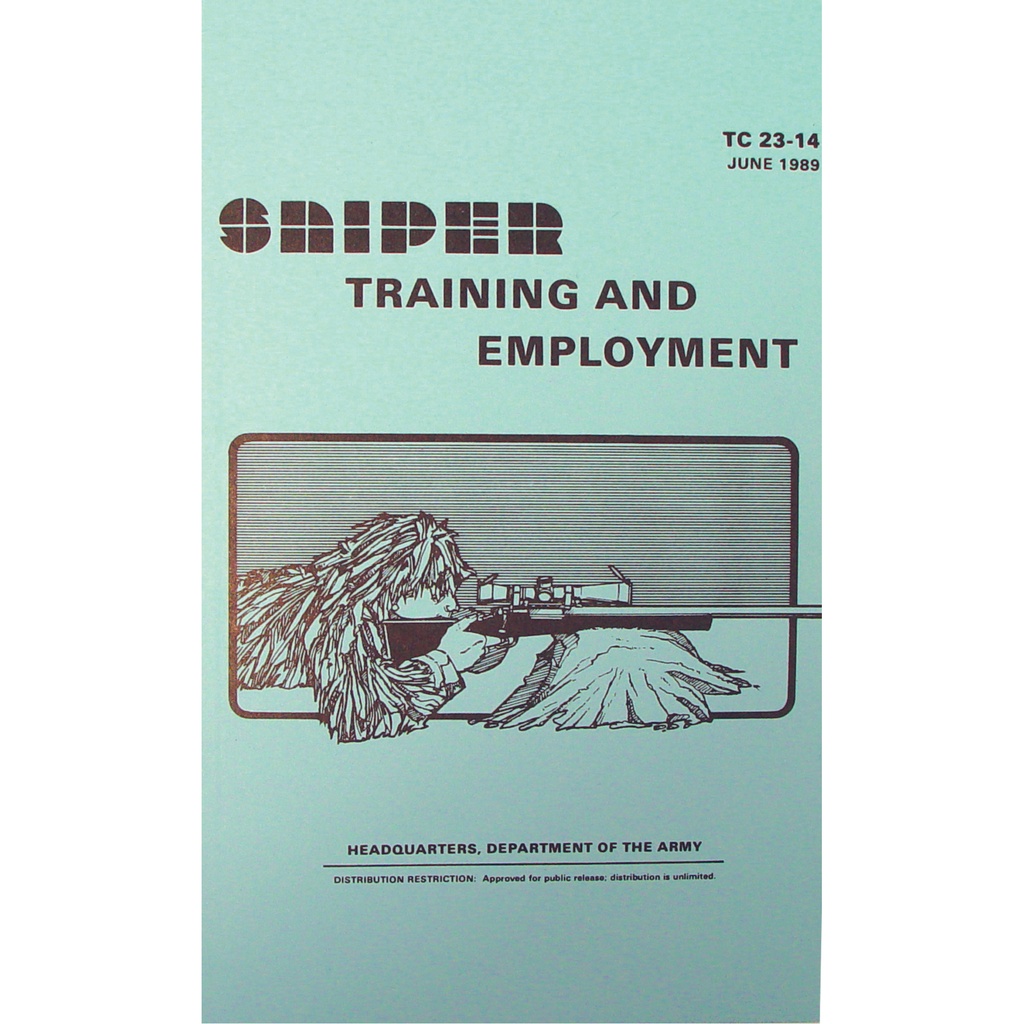
- For collectors: This is a faithful reprint of an official U.S. Army training circular, complete with period language, layout, and the iconic prone sniper line art on the teal cover. It anchors any military manual collection with a serious sniper doctrine piece.
- For instructors and trainers: The manual offers a structured framework for courses, from basic marksmanship blocks to advanced field exercises. It’s doctrine, not opinion—and that makes it a solid reference point.
- For precision shooters: Even if you’re running modern optics, rifles, and ballistic software, the fundamentals here still apply. Wind, distance, position, and discipline haven’t changed.
Build, Format, and Usability
This is a softcover reprint designed to be used, not babied. The layout mirrors the original Army technical style: clear headings, direct language, and diagrams where they’re needed—not filler graphics. The light teal cover with dark line art is instantly recognizable to anyone who’s handled real field manuals.
The softcover format makes it easy to throw in a range bag, training binder, or deployment footlocker. It’s meant to be dog-eared, highlighted, and referenced, the way a well-used balisong trainer gets scuffed from real practice.
What Balisong Buyers Want to Know
Are butterfly knives legal to buy?
Butterfly knife legality in the U.S. is highly state-specific, and serious buyers treat it with the same respect they give to safe gun handling. This sniper training and employment manual isn’t a butterfly knife for sale, but if you’re in the same gear and training world, you should know the basics.
As of current general guidance (always verify locally):
- Generally more permissive states (e.g., Texas, Arizona, Utah, Florida) often allow ownership and open carry of balisongs, with fewer restrictions.
- More restrictive states (e.g., California, New York, New Jersey, Hawaii, Massachusetts) may treat butterfly knives as switchblades or prohibited knives, limiting possession, carry, or sale.
- Mixed or conditional states (e.g., Washington, Oregon, Colorado, Pennsylvania) may allow ownership but restrict concealed carry, blade length, or where you can have them.
Laws change and can vary by city or county, just like local range rules differ. Always check current state statutes and local ordinances—or consult an attorney—before you buy a balisong or butterfly knife.
What’s the difference between a butterfly knife trainer and a live blade?
In the balisong world, a trainer has the same handle structure and pivot action as a live butterfly knife but an unsharpened, usually blunt or holed blade profile. You get to develop timing, aerials, and flow without risking deep cuts. A live blade is sharpened and behaves like a functional cutting tool or defensive blade.
The parallel in sniper training is dry-fire and reduced-risk drills versus live-fire under full conditions. Trainers are about building clean reps; live blades—and live ammo—are about validating skill when consequences are real.
Is this butterfly knife good for learning to flip?
This product isn’t a butterfly knife for sale; it’s a sniper doctrine book. But the mindset behind it is exactly what makes someone good at balisong flipping: structured practice, respect for risk, and a willingness to learn fundamentals before chasing flash.
If you are shopping for a balisong to start flipping, look for:
- A dedicated trainer blade with safe edges
- Smooth, consistent pivots without excessive play
- Balanced handles that don’t fight your control
Then treat your flipping sessions the way this manual treats sniper drills: focused reps, clear goals, and no shortcuts on safety.
Where Precision People Overlap
Whether your world is long rifles, butterfly knife flipping, or both, Sniper Training And Employment speaks to the same core identity: someone who takes skill seriously. The collector sees a snapshot of Army sniper doctrine in its original context. The instructor sees a structured way to teach and refine performance. The shooter sees fundamentals that still matter in a modern setup.
If your shelves already hold balisong trainers, competition blades, or carefully selected EDC pieces, this manual belongs there too. It’s another piece of the same story—one where discipline, craft, and honest performance always beat hype.