Dune Shadow Field Survival Paracord - Desert Tan
9 sold in last 24 hours
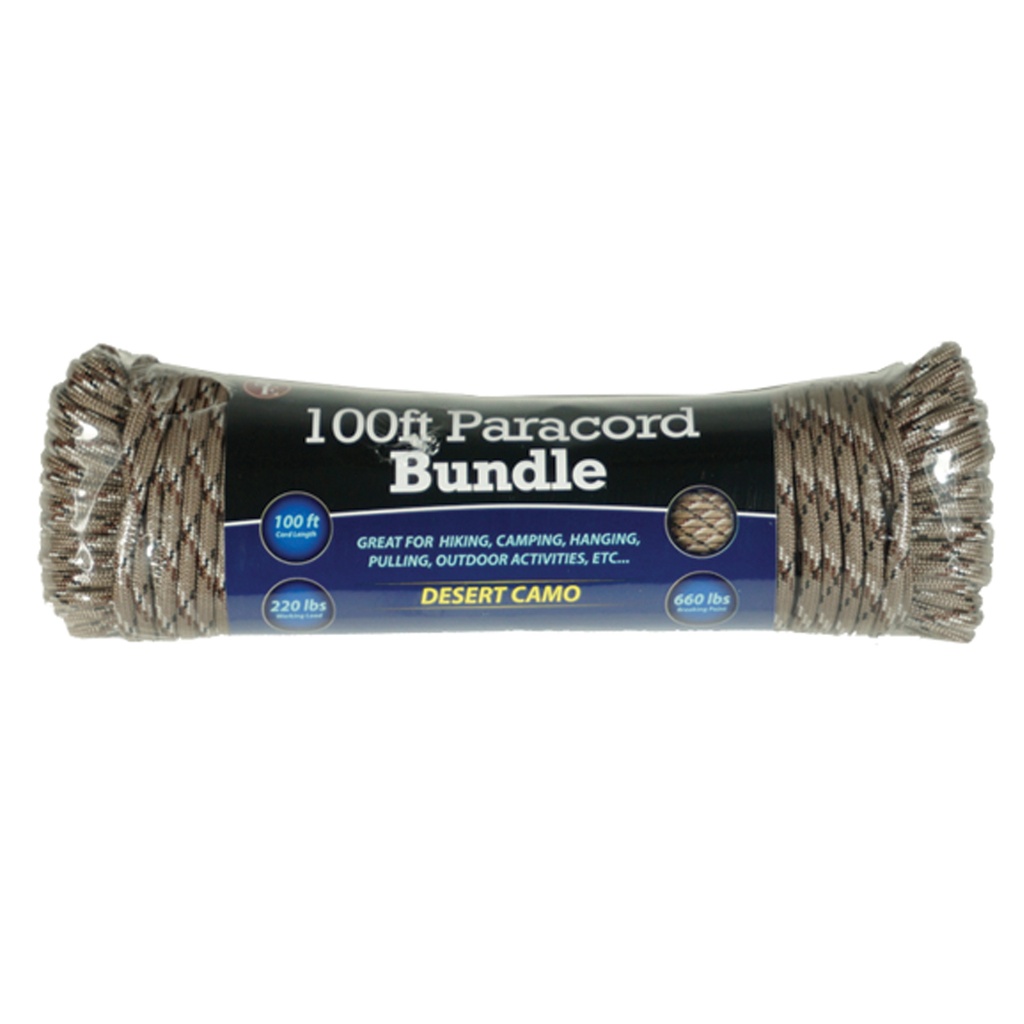
You don’t have to flash neon to be ready. This desert‑tan 7‑strand survival paracord runs 100 feet of quietly capable line with 220 lb working load and 660 lb break strength. The smooth sheath knots clean and feeds easily through gear, MOLLE, or pack tie‑downs, while the desert camo pattern disappears into arid terrain. From tarp ridgelines to guy‑outs, lashings, and grab‑and‑go repairs, it’s the low‑profile cord you throw in every pack, glovebox, and go bag.
Desert Camo Readiness in a 100 ft Bundle
Some gear screams for attention. The Desert Scout 7-Strand Survival Paracord - Desert Tan does the opposite. It disappears into sand, scrub, and sunburned rock while quietly covering the jobs that actually keep a camp, rig, or range day running. One 100 ft hank, 7 inner strands, 220 lb working load, 660 lb break strength — simple specs that matter when you’re miles from the truck and something needs to hold.
This isn’t wall décor paracord. It’s classic 7‑strand survival line dressed in desert camo for anyone who spends more time under open sky than fluorescent lights.
Field-Ready Paracord Built for Real Use
At its core, this survival paracord is about predictable performance. The 5/32" diameter runs comfortably through gloved hands, the sheath feels smooth but not slick, and the inner bundle of seven strands gives you options when you need finer cordage fast. When you’re fixing gear or rigging a tarp in a crosswind, those details matter more than any marketing claim.
7-Strand Core for Versatile Field Tasks
The seven inner strands are classic survival paracord construction. Need to sew up torn gear, improvise a snare, or rig a quick fishing line in a pinch? Strip the desert‑tan sheath, pull what you need, and you’ve got multiple thinner lines without packing extra spools. The outer sheath still serves as a lightweight jacket cord, tie‑down, or backup guy line.
220 lb Working Load, 660 lb Break Strength
Numbers aren’t hype here — they’re your safety margin. With a 220 lb working load and 660 lb break strength, this paracord is tuned for shelter rigging, pack lash‑downs, hanging bags, and campsite organization. It’s not a climbing rope and doesn’t pretend to be; instead, it hits that sweet spot of strength, packability, and flexibility that keeps it useful instead of overbuilt and left behind.
Desert Scout Survival Paracord for EDC, Range, and Trail
Whether your world is canyon dust, dry pine, or sun‑baked concrete, desert‑tan just works. The subtle camo flecking on this 100 ft bundle blends into arid terrain and tactical setups alike. It looks at home on tan rucks, plate carriers, range bags, and roof racks — no loud colors, no high‑viz shine unless you add reflective wraps yourself.
Slip it into a go bag, wrap a length around a water bottle, or weave it into a minimalist lanyard or wrist carry; the pattern reads "prepared" without shouting it.
Desert Camo That Actually Disappears
Plenty of "camo" paracord is more fashion than function. Here, the desert‑tan base with darker zigzag flecks is tuned for low‑profile use in sagebrush, scrub, and dust. Stash camp food high in a tree, run a ridgeline between sandstone outcrops, or tie down gear on a tan roof basket — the colorway blends instead of broadcasting your setup.
Smooth Sheath, Clean Knots
Knots should cinch, set, and stay. The tight, smooth weave on this sheath lets you throw reliable hitches and bends that release when you want them to, not before. It glides through grommets and hardware without excessive drag, making it ideal for tarps, bivy rigs, and quick camp adjustments when the wind shifts or the weather rolls in faster than forecast.
Why 100 Feet of Desert-Tan Paracord Belongs in Every Kit
Every pack has that one piece of gear that saves the day more than anything else. For a lot of seasoned hikers, overlanders, and preppers, it’s a 100 ft hank of paracord. This Desert Scout 7-Strand Survival Paracord earns that spot by staying usable across a ridiculous range of tasks while staying out of sight when you don’t need it.
- Camp and Shelter: Tarp ridgelines, guy lines, tent repairs, improvised clotheslines.
- Vehicle and Overland: Securing loads, bundling cables, marking gear, last‑minute rack lash‑downs.
- Everyday Preparedness: Bootlace backups, zipper pulls, lanyards, key fobs, quick repairs.
- Emergency Use: Splint tie‑downs, improvised slings, signal rigging when paired with visible material.
Because it comes in a neatly wound, retail‑ready bundle with fused ends, it also drops cleanly into store hooks or gear shelves without tangling, making it a practical choice for both individual buyers and shop owners stocking preparedness basics.
Hardware-Minded Buyers Appreciate Honest Specs
Knife people, gear heads, and balisong collectors have one thing in common: they care about real specs more than hype. This paracord doesn’t hide behind vague strength claims or undefined "mil‑spec" buzzwords. You get a clear 100 ft length, a defined 5/32" diameter, and published load ratings, so you know exactly what you’re working with before you commit it to a job.
The construction is a classic smooth woven sheath over seven inner strands — a proven format that balances flexibility, knot‑holding, and long‑term durability when exposed to sun, dust, and repeated flexing in the field. It plays well with carabiners, cord locks, and hardware you already run on packs and tarps.
What Balisong Buyers Want to Know
Are butterfly knives legal to buy?
Legality on butterfly knives (balisongs) in the U.S. changes by state and sometimes even by city, so it’s worth checking current laws where you live before you buy. As of the latest widely referenced rulings, many states like Texas, Arizona, Utah, and Florida generally allow ownership and carry of balisongs, while others impose restrictions on concealed carry, blade length, or how you transport them. A few states, including Hawaii, Washington, and New Mexico, treat butterfly knives much more strictly, with heavy restrictions or outright bans.
Laws can change and case law can shift how statutes are enforced, so serious balisong collectors and flippers typically double‑check both state code and local ordinances, and when in doubt, consult an attorney or authoritative legal resource before they buy or carry.
What's the difference between a butterfly knife trainer and a live blade?
A balisong trainer keeps the exact same handle structure, pivots, and flipping feel as a live butterfly knife, but swaps the sharpened edge for a blunt or holed training blade. That means you can drill openings, closings, rollovers, and aerials without worrying about edge bites while you build muscle memory. A live blade butterfly knife is sharpened and ready for cutting tasks or self‑defense roles, which raises both safety and legal stakes when you flip or carry it.
The flipper community typically recommends logging serious time on a trainer before moving to a live balisong, especially for more advanced tricks. Collectors often own both — trainers for skill sessions, live blades for the collection case or responsible carry where it’s legal.
Is this butterfly knife good for learning to flip?
If you’re just getting into butterfly knife flipping, you want a balisong with predictable balance, solid hardware, and a build that can handle drops. Look for actual pivot hardware details (bushings or bearings, washer material), handle construction (channel or sandwich), and latch style, because all of these change how cleanly it tracks through openings and combos.
Most new flippers start with a dedicated balisong trainer so they can learn safe-handle vs. bite-handle orientation and basic chaplins, fans, and rollovers without building a scar catalog. Once the fundamentals feel automatic, moving to a live blade with similar balance and construction is the natural next step.
Paracord That Fits Every Role: Collector, Flipper, Carrier
Even in a balisong‑heavy kit, paracord quietly earns its space. The Desert Scout 7-Strand Survival Paracord - Desert Tan coils easily alongside your favorite butterfly knife, disappears against desert and coyote‑tan gear, and steps up anytime something needs to hang, lash, or hold under tension.
If you’re a collector, it’s the desert‑camo line you use for clean lanyards and display rigs. If you’re a flipper, it’s what you trust for range bag tie‑downs and field repairs during meetups and competitions. If you’re a daily carrier, it lives in your pack, glovebox, or go bag, earning its keep one quiet problem‑solve at a time.
Not every piece of kit has to be loud to matter. This one just works — and in the field, that’s what counts.