Canyon Strata Damascus Skinner Knife - Horn & Turquoise
7 sold in last 24 hours
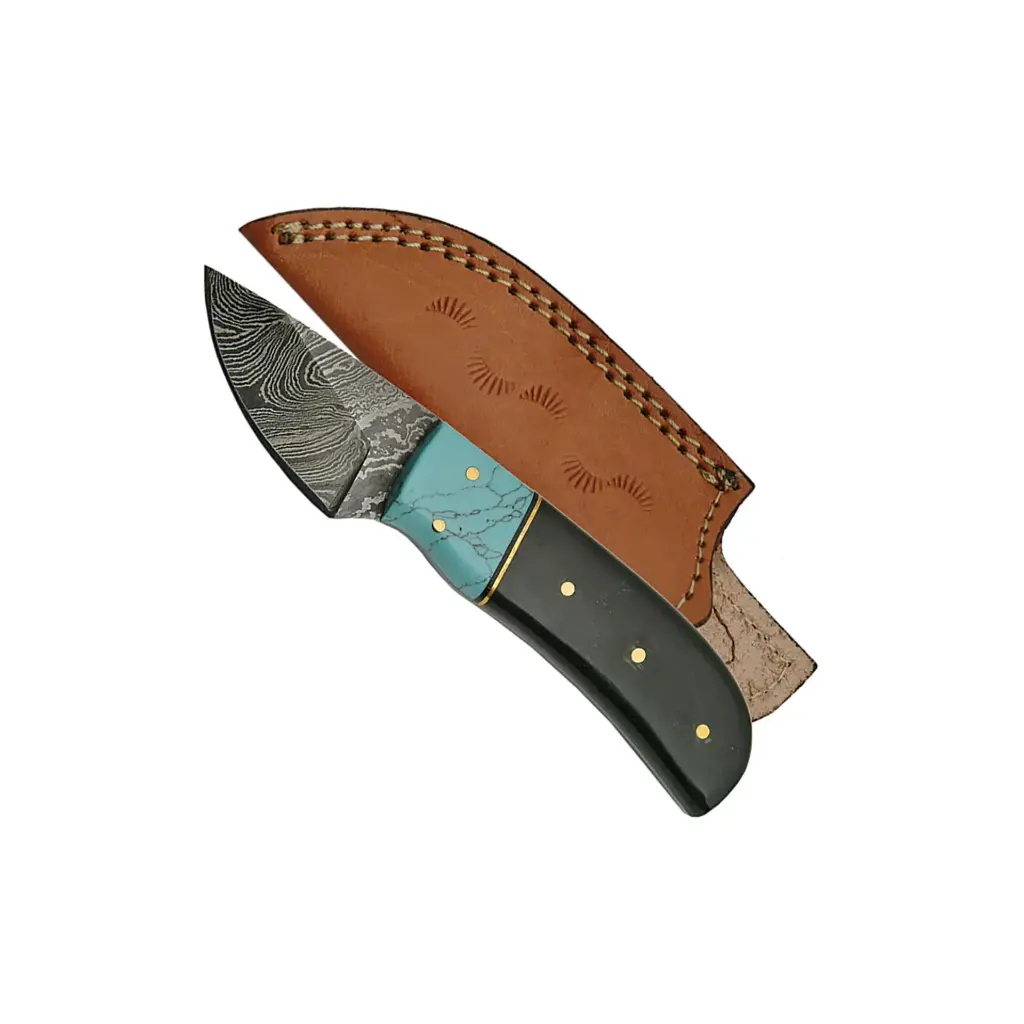
The Strata Weave Damascus Skinner Knife - Horn & Turquoise feels inevitable in the hand—compact, full tang, and shaped for clean, controlled cuts. Layered Damascus steel in a 2" drop point pairs with polished horn and a turquoise inlay that looks pulled from canyon rock. At 5.5" overall, it vanishes on your belt until the work starts. The leather sheath keeps it quiet and ready, a small field companion that looks custom yet is built to be used.
Feel the Edge: A Damascus Skinner That Just Fits
There’s a moment when a field knife disappears in your hand and all that’s left is control. The Strata Weave Damascus Skinner Knife - Horn & Turquoise lives in that moment. At 5.5" overall with a 2" drop point blade, this compact Damascus skinner doesn’t shout for attention—until you take a closer look at the layered steel, the horn, and that streak of turquoise that looks like a river cutting through rock.
This is the knife you grab when the work is real and the space is tight: breaking down game, trimming hide, or making precise cuts around joints. It’s built small on purpose—less bulk, more control, and a grip that locks in without needing aggressive texturing.
Strata Weave Damascus: Layered Steel Built to Work
Damascus steel isn’t just for the display case. On this skinner knife, the patterned blade is a working edge first and a visual flex second. The rippled lines you see running the length of the 2" drop point are the product of layered steels forged and etched to reveal that wave pattern—a nod to classic bladesmithing with modern performance expectations.
The drop point profile gives you a strong spine with a fine, usable tip—perfect for detailed skinning work where you need to slide just under the hide without punching through. The plain edge keeps sharpening simple, and the compact length means you’re always close to the work, not fighting excess blade.
Full Tang Control, Compact Profile
The Strata Weave Damascus Skinner runs full tang from tip to pommel. That means the Damascus steel continues straight through the handle, adding strength, balance, and a consistent feel from front to back. Multiple brass pins lock the horn scales to the tang, turning blade and handle into one solid unit. No flex, no mystery joints—just straightforward, honest construction.
Drop Point Geometry for Clean Skinning
The drop point shape earns its place in the field. The spine slopes down toward the tip, creating a controllable point that resists snapping under torque yet still feels precise. In skinning use, that geometry translates to fewer accidental punctures and smoother, longer cuts along the hide. Short blade, full control, minimal drag—that’s what this profile is built to deliver.
Horn & Turquoise Handle: Field Grit Meets Collector Detail
What sets this skinner apart visually is the handle. Dark, polished horn forms the base—organic, dense, and warm in the hand. In the midsection, a band of turquoise with visible veining breaks up the darkness like a mineral seam in canyon rock, framed by brass for contrast. It’s a classic Western materials story: horn, stone, and steel.
Beyond looks, the ergonomics matter. The handle is shaped with a subtle curve and belly to nest naturally into your palm, with enough swell to keep your fingers from sliding forward when things get slick. Horn offers a smooth yet confident grip, especially when paired with the contouring along the sides.
Polished Horn with Natural Warmth
Horn has long been a traditional handle material for serious field knives. It sits between bone and hardwood in feel—denser than wood, less brittle than bone when cared for. The polished finish on this skinner isn’t just about shine; it smooths out hot spots while still letting the organic texture do the grip work. Over time, horn develops a quiet patina that makes each knife more personal with every season.
Turquoise Inlay: A Visual Anchor with Western Roots
The turquoise inlay isn’t an afterthought. It’s the visual anchor of the handle, a line of color that immediately reads as Southwestern and handcrafted. Each piece of turquoise shows its own veins and character, so no two knives look exactly alike. For collectors, that means individuality. For hunters and outdoorsmen, it’s a piece that feels at home against leather, denim, and earth.
Built for the Field: Carry, Size, and Use
At 5.5" overall, this Damascus skinner is intentionally compact. It’s designed as a close-quarters field tool, not a camp chopper. The included brown leather sheath rides securely on the belt, with decorative stamping and contrast stitching that match the knife’s custom feel. Slide it on in the morning, and you’ll forget it’s there—until you need it.
That small footprint pays off when you’re working on detailed cuts where a big blade would get in the way. It’s the kind of knife that shines during processing sessions at the tailgate or camp table, where precision beats reach every time.
Collector Presence in a Working Skinner
This piece sits right in the intersection of user and collectible. The Damascus pattern, horn handle, and turquoise inlay give it obvious display-case appeal, but nothing about the construction is fragile or overly precious. Full tang, pinned scales, leather sheath—it’s meant to be carried and used.
If you stock or collect Damascus hunting and field knives, this Strata Weave pattern and horn-turquoise combo hits a sweet spot: visually distinctive without crossing into impractical art piece territory. It’s the kind of knife a hunter can justify buying because it looks custom yet is totally tuned for real field work.
What Balisong Buyers Want to Know
Are butterfly knives legal to buy?
Legality on butterfly knives and balisongs in the United States varies heavily by state and even by city or county. Some states treat them like standard folding knives, while others classify them alongside switchblades or restricted "gravity knives." As of the latest widely referenced legal overviews:
- Generally more permissive states (often allowing ownership and, in many cases, carry with fewer restrictions) include: Arizona, Texas, Utah, Idaho, Kansas, Oklahoma, Florida, Georgia, and much of the South and Midwest.
- States with significant restrictions—on possession, sale, or carry—can include: California, New York, New Jersey, Massachusetts, and Hawaii, along with some local jurisdictions that have their own bans or limits.
Because laws change and enforcement can differ by city or county, always check current state and local statutes—or consult an attorney—before you buy a butterfly knife or balisong or carry one in public. Fixed blade hunting and skinner knives like this Damascus piece are often regulated differently than balisongs, with rules focused more on blade length and carry method.
What’s the difference between a butterfly knife trainer and a live blade?
A butterfly knife trainer is a balisong built for flipping practice. Instead of a sharpened edge, the trainer blade is dull or has holes/machining to reduce weight and clearly differentiate it from a live blade. The handles, latch, and pivot action mirror a real balisong so flippers can drill tricks, ladder flows, and combos with minimal risk of cuts.
A live blade butterfly knife uses the same handling and hardware layout, but the blade is sharpened and fully functional. It’s suited for experienced flippers, collectors, or those who want a distinctive EDC cutting tool that also flips. Trainers excel for learning and repetition; live blades demand cleaner technique and more respect, since every fumble can bite.
Is this butterfly knife good for learning to flip?
This particular Strata Weave Damascus Skinner Knife - Horn & Turquoise is a compact fixed blade hunting and field tool, not a butterfly knife or balisong. It doesn’t flip, doesn’t have pivoting handles, and is designed for controlled skinning work rather than aerial tricks or balisong flow practice.
If you’re looking to learn butterfly knife flipping, start with a purpose-built balisong trainer that matches the weight and balance of a live balisong but uses a dull blade. Once your opening, closing, and basic tricks are clean, stepping up to a live blade balisong becomes a lot safer and more rewarding.
Where This Knife Belongs: Hunter, Collector, Daily Carrier
Every knife finds its person. The Strata Weave Damascus Skinner Knife - Horn & Turquoise fits three types right away:
- The hunter or outdoorsman who wants a compact, full-tang skinner that won’t fight them during the fine work.
- The collector who appreciates Damascus, horn, and turquoise as classic materials and wants a piece that still feels approachable and usable.
- The daily carrier in the field—guides, ranch hands, or anyone running land—who prefers a small fixed blade on the belt instead of a folder in the pocket.
It’s not a balisong. It doesn’t flip, doesn’t roll, and won’t join your ladder combos. What it does is simpler and older: it cuts clean, rides light, and looks like it’s been part of the landscape for decades. If your kit needs a compact Damascus skinner that can earn its keep season after season, this is where it starts.
| Blade Length (inches) | 2 |
| Overall Length (inches) | 5.5 |
| Blade Color | Silver |
| Blade Finish | Patterned |
| Blade Style | Drop Point |
| Blade Edge | Plain |
| Blade Material | Damascus |
| Handle Finish | Polished |
| Handle Material | Horn |
| Theme | Damascus |
| Handle Length (inches) | 3.5 |
| Tang Type | Full Tang |
| Carry Method | Sheath |
| Sheath/Holster | Leather |